
|
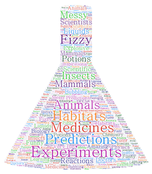
The pupils of Rattlesden 'Science' word cloud. |
Our Science Vision.
Intent
At Rattlesden our intention is that our Science curriculum is ambitious for all learners and driven by strong leadership who have a clear vision of high-quality education. We want to stimulate our children to be inquisitive and have a desire to find out answers to their own questions, creating a real 'buzz' to their learning and being inspired to follow career opportunities linked to science. Encouraging them to develop a genuine interest in the world around them and a passion to find out about it.
Implementation
The children will build resilience through trial and error exploration, where they will not always get the results they expect and things will not always go right. Independently they will begin to link prior scientific knowledge with current learning. Our children will develop a greater, secure depth to their science understanding and appreciate the relevance of science to themselves and the world around them.
Through our curriculum we will support pupils to develop their aspirations for their futures and become life-long learners.
Impact:
Children enjoy and are enthusiastic about science in our school There is a clear progression of children’s work and teacher expectations throughout the year groups. Children’s work shows a range of topics and evidence of the curriculum coverage for all science topics. Children are becoming increasingly independent in science, selecting their own tools and materials, completing pupil lead investigations and choosing their own strategies for recording. Feedback from teachers has impact on our pupils, often with next step questions to push learning on. Standards in science at the end of the key stages are good and issues arising are addressed effectively in school. Teachers’ judgements are moderated internally and our SLT and governors are kept up to date with developments in the way science is run in our school with subject reports, action plans and review meetings.
In addition, we measure the impact of our curriculum through the following methods:
- Book looks
- Pupil voice
- Regular feedback each lesson
Our school is leading a cluster programme for the Primary Science Teaching Trust (PSTT). This is a collaborative group providing the children with the opportunity and environment to excel in science. You can find out more here.
Priorities for Science in our School (2023 - 2024)
- Aid key knowledge to be secured to long term memory.
- Increase and improve monitoring of Science
- Ensure that all working scientifically skills are covered more evenly across the year’s planning
- Challenge for the more able
Current science policy...
Vocabulary progression...
Skills progression...
PSTT primary science curriculum progression
PLAN progression in vocabulary (nursery to Yr6)
Long term planning
|
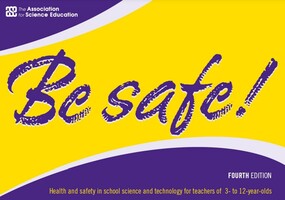
Science Health and Safety...At Rattlesden we use the health and safety guidance for teaching science from the 'Be Safe, 4th Edition' booklet.
If you would like further infomation please contact the school direct.
| ||||||||||||
| ks2_long_term_plan.pdf |
Our virtual science library...
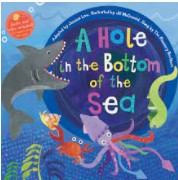
A Hole in the Bottom of the Sea
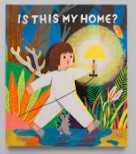
Is This My Home?
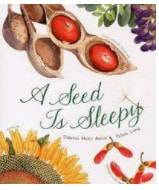
A Seed is Sleepy.
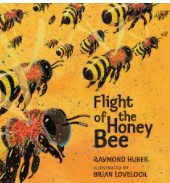
Flight of the Honey Bee.
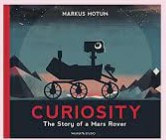
Curiosity. The story of a Mars Rover
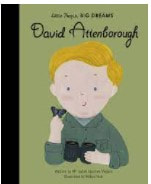
David Attenborough - Little People, Big Dreams
Is This My Home?
A Seed is Sleepy.
Flight of the Honey Bee.
Curiosity. The story of a Mars Rover
David Attenborough - Little People, Big Dreams
Science book recommendations... |
| ||
Summer - year 6 Science Fair


Autumn 23 Science around the school ...
Oct 23 - In Cedar Class we were 'Electrical Engineers' and had to test objects and materials which might help a soldier on the front line fixed their broken circuit on their GPS tracking system. After testing, the teams had to report back to them.
|
|
|
Summer term 2023 Science around the school
April 2023, Ms Lovelock recently attended training lead by 'Freshwater Habitats Trust' learning how to use nutrient testing tests to test water for pollution levels. Watch this space for how we will use the kits to test water locally and what our results show.
Spring term 2023. Science around the school ...
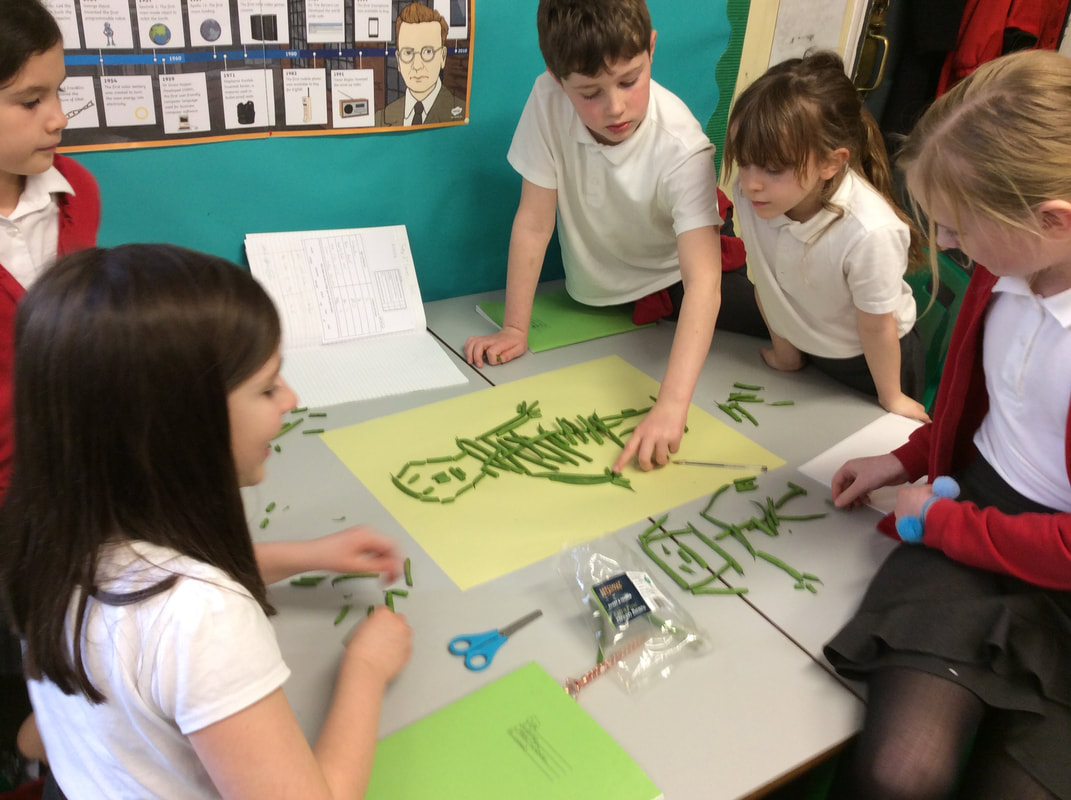
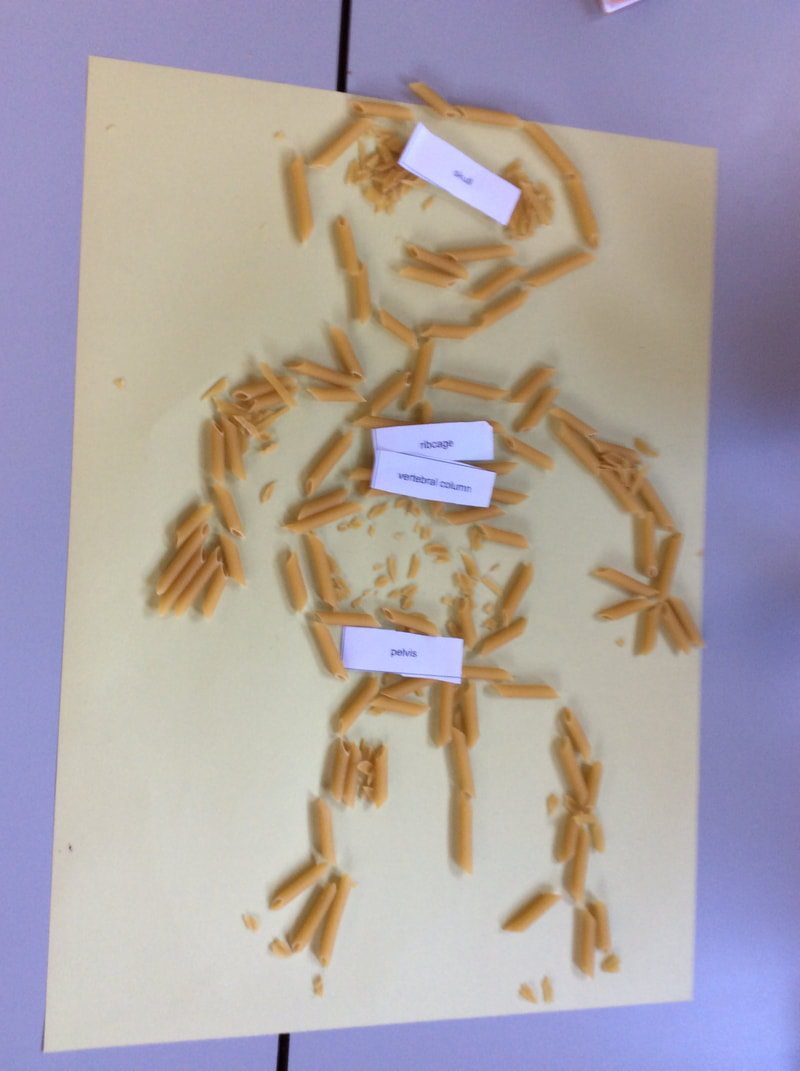
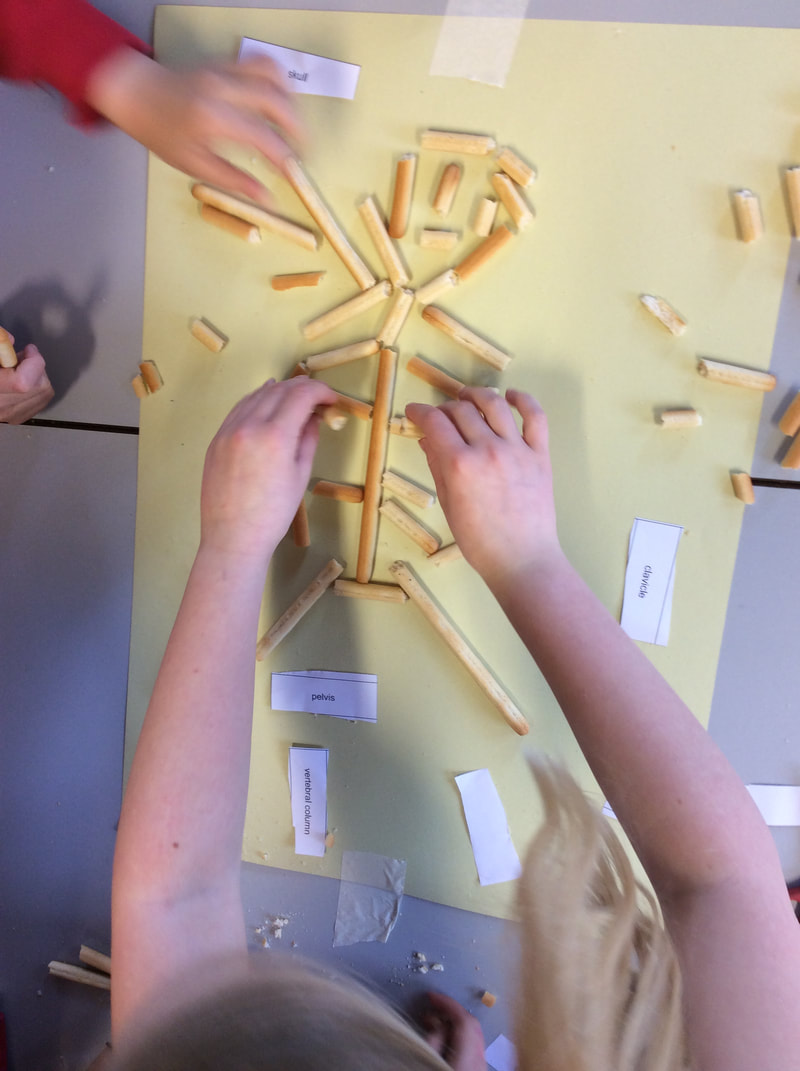
March 2023, Cedar Class - constructing models of the human skeleton out of food.
British Science Week, March 2023 - Connections
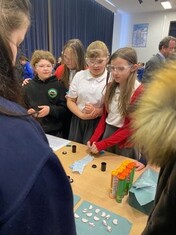
A great BSW STEM festival at Thurston Community College
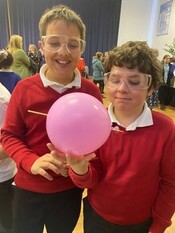
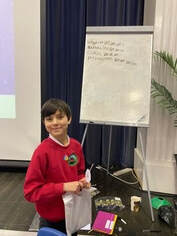
Great experiments- extracting iron from breakfast cereal, looking at sand & sugar under a microscope, investigating conductors in a circuit & piercing balloons without popping. Jeremy was runner up in the quiz!
Great experiments- extracting iron from breakfast cereal, looking at sand & sugar under a microscope, investigating conductors in a circuit & piercing balloons without popping. Jeremy was runner up in the quiz!
|
|
|
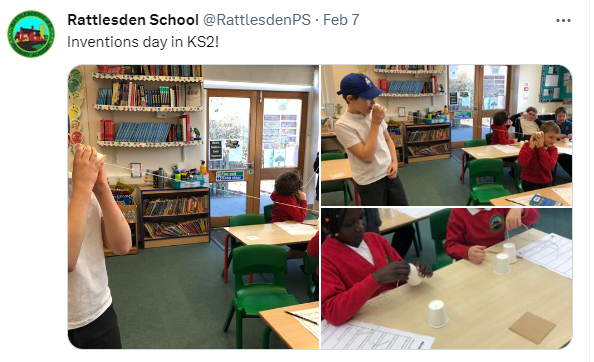
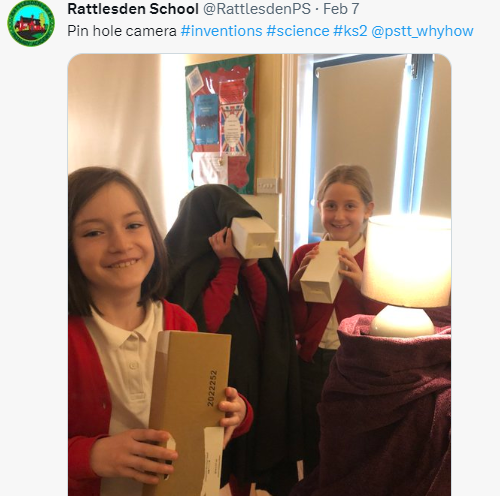
KS2 inventions Day, Feb 2023
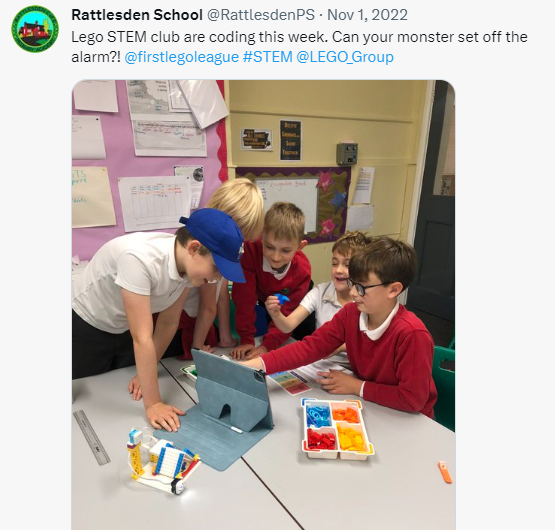
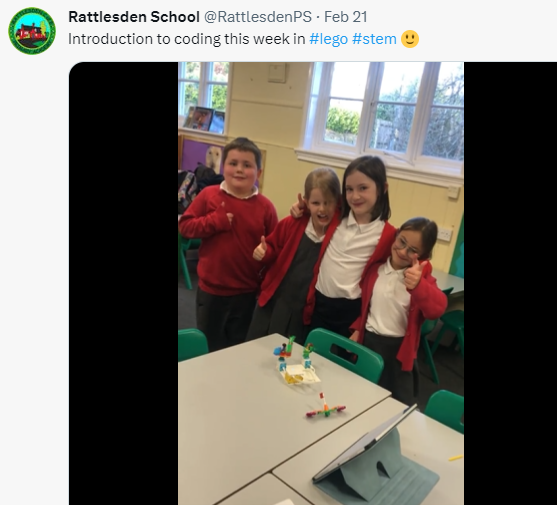
After school Lego STEM Club (2022 2023)
July 2022
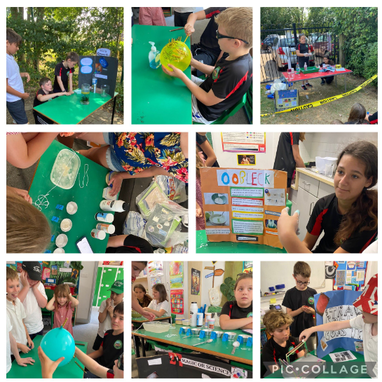
Year 6 planned and held their own science fayre
for the rest of the school to visit.
for the rest of the school to visit.
May 2022
Year 4 / 5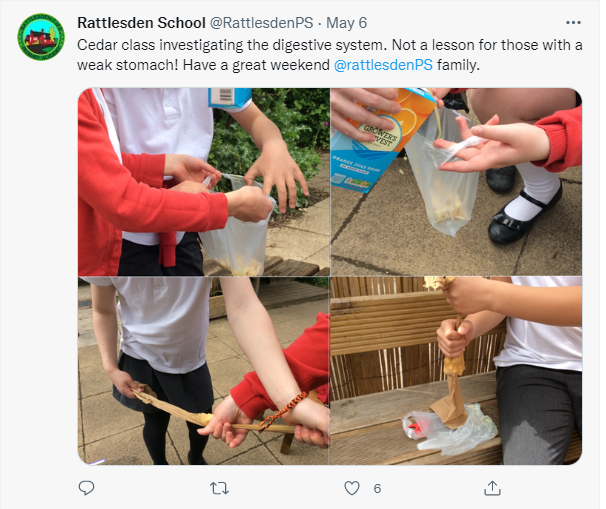
Pupils, parents & carers spring welly walk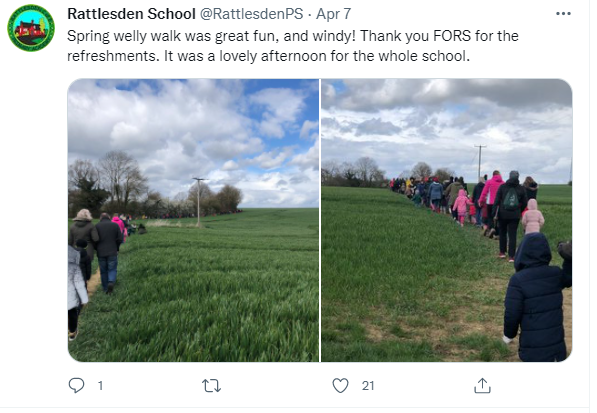
|
Staff Science CPD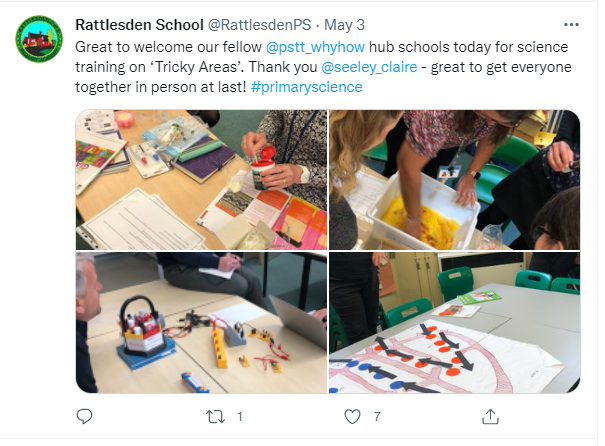
Spring 2022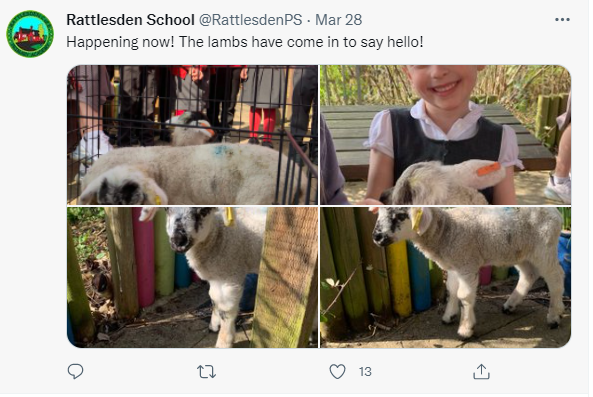
Spring lambs visit |
EYFS & KS1 Darwin, Minibeasts & Birds @ Lackford Lake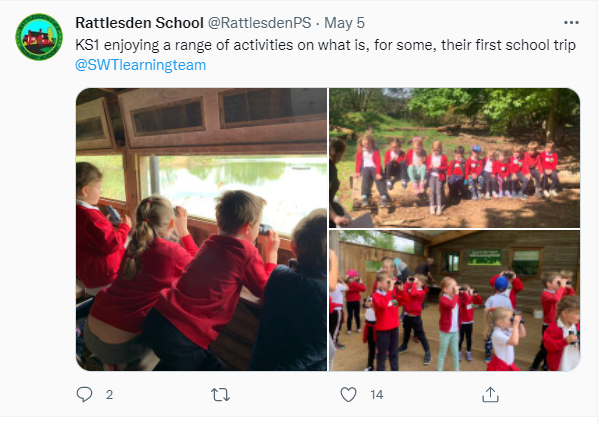
|
Autumn 2021
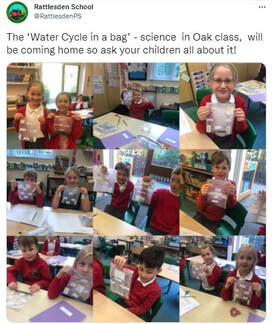
|
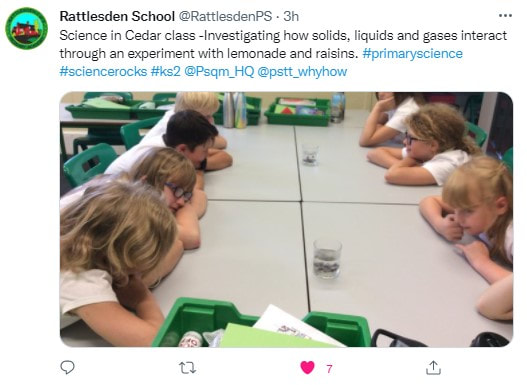
|
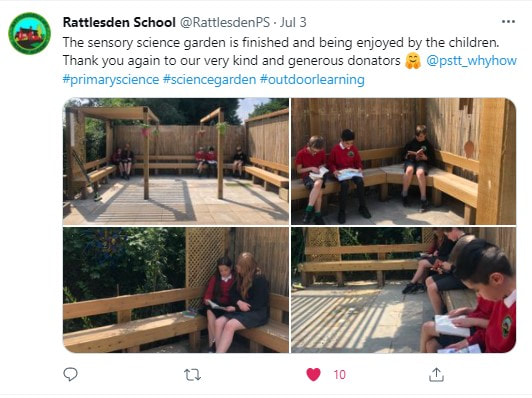
July 2021: Look at our fabulous new sensory science garden...
As a family, why not explore the 'let's go live' science shows with Maddie & Greg.
|

|
'Open Up Science' the magazine from Cambridge Science Centre.
Issue 50: Colour Issue 55: Sports science
Have a go at the fun activities at home with your families. We'd love to see what you discover. Tweet us at @RattlesdenPS
Issue 50: Colour Issue 55: Sports science
Have a go at the fun activities at home with your families. We'd love to see what you discover. Tweet us at @RattlesdenPS
|
| ||||

|
|
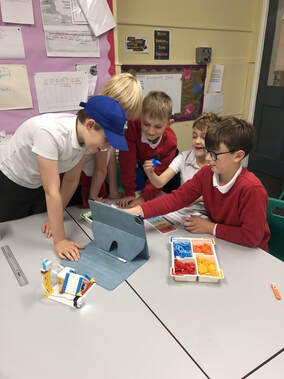
Lego STEM club is on every week for children to follow the LEGO® Education SPIKE™ Essential programme. This is a new primary school STEAM solution that ignites students’ passion for STEAM learning through playful problem solving and storytelling, preparing them to be resilient, independent thinkers.
education.lego.com |
|
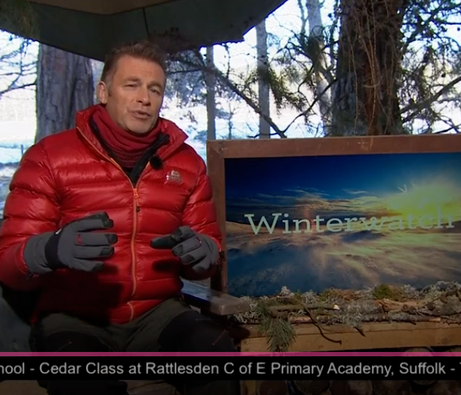
We take opportunities to 'get out there' with our science, including having our question answered on
BBC Winterwatch and being 'Tweeted' by NASA!
BBC Winterwatch and being 'Tweeted' by NASA!
At Rattlesden Primary School this is what we believe science should be like:
- Science is fun and hands on.
- Children get a light bulb moment and realise why something happens.
- Science is seen as important and relevant to the children's lives.
- Science learning is cross curricular
- Children learn practically.
- Science learning is celebrated on displays around the school.
- Children are excited about finding things out for themselves.
- Children use all their senses to discover and find things out.
- Science learning carries on at home with parents and guardians
- This is very important to us and so much so that in 2018 we are to begin our Primary Science Silver Award!
Science is concerned with children finding out about the world around them, including finding out about plants and animals, the weather, space, engines, machines, energy and forces, types and uses of materials. They will also learn about the structure and functions of their bodies and senses.
Our Science curriculum provides the necessary experiences to satisfy the requirements of the National Curriculum and ensure that there is progression in the development of skills and knowledge throughout the age range.
Science Museum
Have you ever wanted to try out strange experiments?
Follow the link and have a go at some of these fun science experiments.
If you complete one of these experiments then come in and tell us. We would love to hear what happened.
http://learning.sciencemuseumgroup.org.uk/resources/
Kids National Geographic
Great website for finding out about the animals, science, nature and history.
This could help greatly with many of our topics.
Follow the link to explore it.
http://ngkids.co.uk/
NASA Kids Club
Calling all you budding astronauts!
Great website to introduce children to space and what is beyond our own planet.
http://www.nasa.gov
BBC Wildlife
Explore and find out so much about the world right here.
http://www.bbc.com/earth/uk
National Science and Engineering Week March 2023: 'Connections' https://www.britishscienceweek.org/
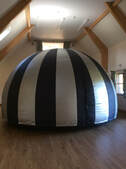
Here at Rattlesden we aim to make science week as exciting as possible. We use the idea of science week and make it our own.
During science week there is a theme that pulls the whole school together. This may be having a crazy science day linked to raising money for charity or having a specific theme that all classes work around.
Science can and should be fun, and so all the teachers take ownership of running exciting experiments and scientific areas of learning to inspire, enthuse and excite the children in the whole school.
https://www.britishscienceweek.org/
During science week there is a theme that pulls the whole school together. This may be having a crazy science day linked to raising money for charity or having a specific theme that all classes work around.
Science can and should be fun, and so all the teachers take ownership of running exciting experiments and scientific areas of learning to inspire, enthuse and excite the children in the whole school.
https://www.britishscienceweek.org/
Find Us |
|

|

|
Website by lizhawkins.co.uk